
A lot of businesses still choose WordPress by default. It is familiar, widely used, and easy to find almost anywhere.
And that makes sense. WordPress became popular in an earlier version of the internet, when a lot of websites were simpler and many businesses were just trying to get something online. It started as a blogging platform, and over time themes, plugins, and page builders made it possible to turn it into almost anything.
For a long time, that was good enough.
But the web changed. Businesses started expecting more from their websites. Customers started expecting more too. Websites were no longer just digital brochures — they became one of the main ways people judge trust, quality, and professionalism before ever calling or visiting in person.
That is where older WordPress-style setups often start to struggle. The more themes, plugins, animations, and add-ons that get layered in, the easier it becomes for a website to feel heavier, slower, and harder to manage over time.
And you do not need to understand technology to notice that. Most people can feel right away when a website is slow, clunky, or frustrating to use. Your visitors notice it too.
In 2026, the better question is not just whether a platform can get your business online. The better question is whether it helps your business show up the right way online.
That is where the difference between WordPress and Next.js starts to matter.
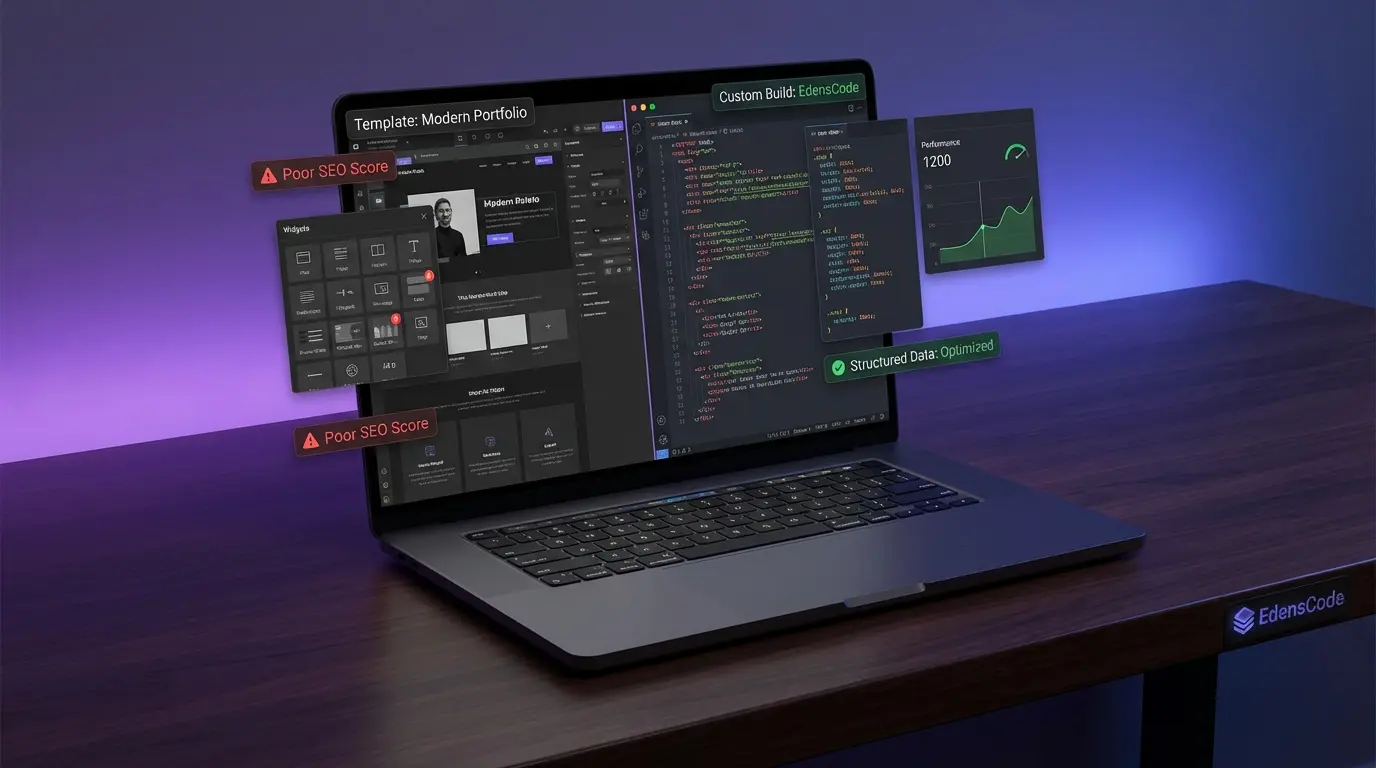
WordPress can still work for some sites, but many business websites end up relying on themes, plugins, and page builders that slowly make the site heavier, harder to manage, and more limited over time.
Next.js gives more control over how the website is built from the start. That means cleaner structure, better performance, and more flexibility without carrying unnecessary weight. That is why Custom Web Design has become a stronger option for businesses that want something built properly from the start.
For business owners, that difference shows up in real ways. A faster website feels better to use. A cleaner structure supports SEO more effectively. A custom build can be shaped around the business instead of forcing the business into a template.
That matters because people judge businesses quickly online. If a site feels smooth, clear, and easy to trust, the business feels stronger. If it feels slow or clunky, that impression goes the other way.
Google also rewards websites that are faster, clearer, and easier to understand. But even before rankings come into the conversation, the user experience is something people notice immediately.
This is not really about technology for the sake of technology. It is about standards. A better website should not just get your business online. It should help your business look more established, easier to trust, and built to grow. And if SEO is part of that goal, it also helps to understand Why SEO Often Struggles on Template-Built Websites.
For businesses that care about speed, structure, long-term flexibility, and a stronger online presence, Next.js often makes more sense in 2026. And if your current site already feels limiting, that is often where Website Migrations start to become part of the conversation.